
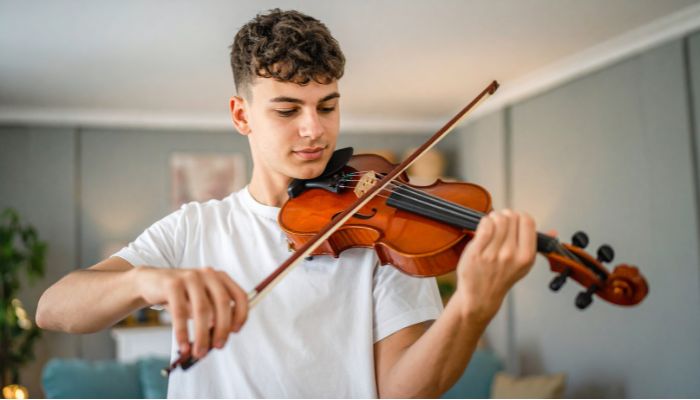
When most people think about the violin, they picture a stuffy concert hall, a tuxedoed orchestra, and centuries-old classical compositions. But here’s the thing—the violin might actually be the most adaptable instrument on the planet. It’s hiding in genres you wouldn’t expect, shaping the soundscapes of cultures across the globe, and frankly, it deserves way more credit than it gets.
I’ve spent enough time digging into music from different corners of the world to realize that the violin isn’t some European exclusive. This instrument has been adopted, adapted, and completely reinvented by musicians everywhere. And if you’re someone who loves music as much as you love travel, understanding the violin’s global story will change how you listen to everything.
From Europe to Everywhere Else
Let’s be honest—the violin as we know it was developed in Renaissance Italy. But the moment it started traveling, cultures took it and made it their own. In Ireland, the fiddle (which is just a violin played differently) became the backbone of traditional folk music. In Hungary, violinists developed techniques and styles so distinct that they sound almost nothing like Baroque compositions. Even in India, the sarangi and other bowed string instruments evolved alongside the violin, creating this weird and wonderful cross-pollination of musical ideas.
What fascinates me most is how the violin became a bridge between worlds. When colonization, trade routes, and migration happened, the violin came along. But instead of just staying European, it got absorbed into local traditions, hybridized with indigenous instruments, and transformed into something entirely new. That’s not colonization ending in erasure—that’s cultural exchange at its finest.
Why the Violin Works Everywhere
There’s something about the violin’s range and expressiveness that makes it almost chameleon-like. Unlike a piano, which is locked into 88 keys, a violinist can bend pitch, slide between notes, and create microtones that give the instrument an almost vocal quality. This flexibility meant that when the violin arrived in different musical traditions, it could adapt to the scales, techniques, and emotional language of those cultures.
The violin can wail like a human voice. It can whisper. It can scream. And that’s why you’ll find it equally at home in a Celtic reel, a Turkish folk dance, a Cuban son, or a Balkan brass ensemble. When you pick up a violin, you’re not just learning to play an instrument—you’re learning to communicate in a language that’s already been translated into dozens of different dialects.
The Sound of Tradition Meets Innovation
Here’s where it gets really interesting for travelers and music lovers. The violin shows up in places where you might not expect it, often because musicians realized it could do something their traditional instruments couldn’t, or it could do something in a completely different way.
In the Balkans, the violin is the star of folk orchestras, played with a raw energy that’s nothing like classical technique. In Turkey and Greece, violinists play with ornamentations and microtonal variations that reflect the maqam system of Middle Eastern music. In Brazil, the violin weaves through samba and choro, providing intricate melodic lines that dance around the rhythm section. In Cuba, violins anchor the son style and contribute to salsa arrangements.
And here’s the beautiful part—because the violin is so malleable, these aren’t just variations on a theme. They’re entirely legitimate interpretations of what an instrument can be. A Turkish violin player isn’t trying to play Bach with an accent. They’re creating music that emerges from their own musical tradition while using an instrument that happens to be the right tool for the job.
If you’re serious about understanding these musical traditions deeply, you need an instrument that can grow with you. This is where having quality gear makes all the difference. Whether you’re learning fiddle, experimenting with different folk styles, or building a collection that represents different musical traditions, shop at Great Violin Cases is worth checking out if you want protection and presentation that actually matches the instrument’s versatility. Cases designed for different playing styles and genres can really make a difference when you’re committed to exploring multiple traditions.
The Violin in Modern World Music
Jump to today, and the violin is everywhere. Jazz violinists like Regina Carter and Christian Howes have proven that the instrument can hold its own in improvisation. Indie and folk artists use the violin to add texture and emotion to contemporary songwriting. World music collaborations regularly feature violins alongside traditional instruments from every continent. Even in hip-hop and electronic music, sampled or live violin adds this organic richness that producers chase.
The reason for this staying power is simple—the violin is honest. It can’t hide. Every emotion, every technical limitation, every expressive choice is right there in the sound. That’s why audiences connect with it across cultures and across decades.
Connection and Culture Through Sound
Travel and music are naturally intertwined. When you visit somewhere new, the music tells you more about the place than a guidebook ever could. And when you start understanding how the violin fits into different musical traditions, you’re understanding something deeper about how cultures communicate and express themselves.
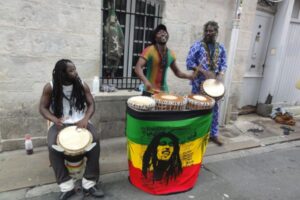
Let me give you an example. If you’re interested in Caribbean music and culture, there’s so much more to explore than what gets exported to the mainstream. The history, the influences, the way colonialism, migration, and resistance shaped the sound—it all matters. Understanding the broader cultural context enriches the musical experience completely. If you’re diving into this kind of deep cultural education, checking out resources like the Jamaican culture guide can give you that context. Then when you listen to Caribbean folk music or contemporary artists from the region, you hear it differently.
The same applies to every musical tradition. The violin isn’t just a sound—it’s a cultural artifact that carries history, technique, emotion, and identity. When you understand where it comes from and how it’s been adapted, you appreciate the music on a completely different level.
Why This Matters for Your Music Journey
If you’re someone who loves exploring new music, building a collection of albums, maybe even learning to play yourself, recognizing the violin’s global significance changes everything. It pushes back against the idea that “serious” or “authentic” music has to come from a specific place or tradition. It shows that the best art happens when cultures interact, influence each other, and create something new while honoring the past.
The violin reminds us that music is fundamentally about connection. Whether it’s a musician connecting with their own heritage, a listener connecting with a culture different from their own, or a traveler connecting emotionally with a place through its sounds—it’s all part of the same human impulse to create meaning through sound.
The Takeaway
Next time you hear a violin, whether it’s in a concert hall, a folk music session, a world music recording, or even a modern pop song, think about everything that instrument carries with it. Think about all the traditions it’s touched, all the techniques it’s absorbed, all the cultures it’s traveled through. The violin isn’t a relic of European classical music—it’s a genuinely global instrument that belongs everywhere because musicians everywhere decided to make it their own.
That’s the real story of the violin. It’s not about preserving tradition for its own sake. It’s about how tradition evolves, how instruments find new purposes, and how music becomes the language that connects us across borders, generations, and cultures.