

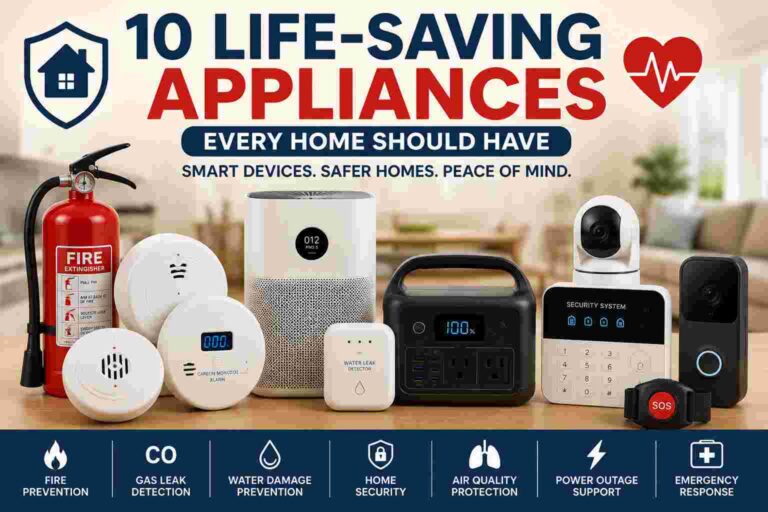
Home safety has become a top priority for families across the United States. From unexpected fires and carbon monoxide leaks to water damage and power outages modern households face a variety of risks that can lead to costly repairs or even life-threatening situations. Fortunately technology has made it easier than ever to protect loved ones through life-saving appliances designed to detect dangers early and respond quickly.
Many homeowners invest in smart TVs gaming consoles and luxury gadgets but often overlook appliances that can protect their health safety and property. The right safety-focused devices can provide early warnings reduce risks and help families stay prepared during emergencies.
In this guide you’ll discover the most important life-saving appliances how they work and why every modern home should consider adding them.
What Are Life-Saving Appliances?
Life-saving appliances are devices designed to prevent accidents detect hazards and improve safety within a home. These appliances help protect families from threats such as fires gas leaks poor air quality flooding electrical surges and medical emergencies.
Unlike traditional household appliances that focus on convenience these products prioritize protection and emergency preparedness. Many modern options now include smart technology allowing homeowners to receive alerts directly on their smartphones.
Why Home Safety Appliances Matter More Than Ever
Today’s homes rely heavily on electricity gas systems connected devices and advanced appliances. While these innovations improve convenience they also introduce new risks.
According to safety experts early detection remains one of the most effective ways to reduce injuries and property damage. Whether it’s a smoke detector identifying a fire in its early stages or a water leak detector preventing major flooding the right appliance can make a critical difference.
Investing in essential home appliances focused on safety can provide:
- Early hazard detection
- Improved family protection
- Reduced property damage
- Better emergency preparedness
- Peace of mind for homeowners
1. Smart Smoke Detectors
A smoke detector remains one of the most important life-saving devices in any home.
Traditional smoke alarms provide audible warnings when smoke is detected. However modern smart smoke detectors offer additional features such as smartphone alerts self-testing capabilities and integration with smart home systems.
Benefits of Smart Smoke Detectors
- Early fire detection
- Mobile notifications
- Voice alerts indicating danger locations
- Reduced false alarms
- Remote monitoring
These devices are particularly valuable for families who travel frequently or own multiple properties.
2. Carbon Monoxide Detectors
Carbon monoxide is often called the “silent killer” because it is colorless odorless and impossible to detect without specialized equipment.
Faulty furnaces gas stoves fireplaces and generators can produce dangerous levels of carbon monoxide. Exposure can cause headaches dizziness confusion and even death.
Why Every Home Needs One
A carbon monoxide detector continuously monitors indoor air and alerts occupants when dangerous levels are present.
Key benefits include:
- Continuous monitoring
- Early warning alerts
- Protection against gas-related incidents
- Increased family safety
Many safety experts recommend installing detectors on every level of a home.
3. Smart Water Leak Detectors
Water damage can become extremely expensive if leaks go unnoticed.
A small leak behind a wall or beneath a sink can lead to mold growth structural damage and costly repairs. Smart water leak detectors help homeowners identify problems before they escalate.
Features to Look For
- Instant smartphone notifications
- Moisture detection sensors
- Automatic shut-off compatibility
- Battery backup
These devices are among the most practical home safety equipment investments available today.
4. Air Purifiers
Indoor air quality has become a major concern for families across the United States.
Dust pollen pet dander smoke particles and airborne pollutants can affect respiratory health. High-quality air purifiers help remove harmful contaminants and improve overall wellness.
Health Benefits
- Cleaner indoor air
- Reduced allergy symptoms
- Better respiratory health
- Lower exposure to airborne pollutants
- Improved sleep quality
For households with children seniors or individuals with asthma air purifiers can be especially beneficial.
5. Smart Security Systems
Home security technology has evolved significantly in recent years.
Modern smart security systems combine cameras sensors alarms and mobile monitoring into a single solution designed to protect families and property.
Advantages of Smart Security Systems
- Real-time monitoring
- Motion detection alerts
- Video recording
- Remote access
- Emergency response integration
As smart home safety devices become more affordable they are increasingly considered essential household investments.
6. Emergency Power Stations
Power outages can occur unexpectedly due to storms extreme weather or infrastructure issues.
An emergency power station provides backup electricity during outages and can power critical devices such as:
- Medical equipment
- Smartphones
- Internet routers
- Lighting systems
- Small appliances
Why They’re Important
Emergency power stations help families remain connected and safe during emergencies.
Benefits include:
- Portable power supply
- Silent operation
- Indoor-safe use
- Emergency preparedness support
These appliances are particularly valuable in regions prone to hurricanes snowstorms and severe weather events.
7. Medical Alert Systems
Medical emergencies can happen without warning especially for seniors living independently.
Medical alert systems provide immediate access to emergency assistance through wearable devices or home-based communication systems.
Key Features
- One-touch emergency calling
- Fall detection technology
- GPS tracking
- 24/7 monitoring services
These systems can significantly reduce response times during critical situations.
8. Smart Doorbells
A smart doorbell offers more than convenience—it enhances home security.
Equipped with cameras and motion sensors these devices allow homeowners to monitor visitors deliveries and suspicious activity from anywhere.
Security Benefits
- Live video streaming
- Motion alerts
- Visitor recordings
- Two-way communication
- Package monitoring
Smart doorbells have become one of the fastest-growing smart home safety devices in the United States.
9. Surge Protectors
Power surges can damage expensive electronics and increase fire risks.
Surge protectors help safeguard valuable equipment by preventing excess electrical voltage from reaching connected devices.
Why You Need Them
Modern households often contain thousands of dollars worth of electronics including:
- Computers
- Smart TVs
- Gaming systems
- Smart home hubs
- Kitchen appliances
A quality surge protector helps extend equipment lifespan while reducing electrical hazards.
10. Fire Extinguishers
Although not always considered an appliance in the traditional sense fire extinguishers remain one of the most important safety devices every household should own.
Best Locations for Fire Extinguishers
- Kitchen
- Garage
- Laundry room
- Workshop
- Basement
Having quick access to a fire extinguisher can help contain small fires before they become major emergencies.
How Smart Technology Is Transforming Home Safety
The rise of smart home technology has revolutionized how homeowners approach safety.
Many modern life-saving appliances can now communicate with each other through connected ecosystems. For example a smoke detector can trigger smart lighting send mobile alerts and notify emergency contacts simultaneously.
Popular smart safety features include:
- Mobile notifications
- Voice assistant integration
- Remote monitoring
- Automated emergency responses
- Real-time system diagnostics
These innovations make it easier than ever to protect families and properties.
Choosing the Right Life-Saving Appliances for Your Home
Not every household has the same needs. The ideal safety setup depends on factors such as location family size home layout and potential risks.
Consider Your Environment
Ask yourself:
- Do you live in an area prone to severe storms?
- Is your home powered by natural gas?
- Are there elderly family members in the household?
- Do you frequently travel?
- Is indoor air quality a concern?
Your answers can help determine which safety appliances should be prioritized.
Focus on Prevention
The most effective safety strategy combines prevention monitoring and emergency response.
Many homeowners begin with:
- Smoke detectors
- Carbon monoxide detectors
- Water leak sensors
- Security systems
- Emergency power solutions
These appliances address some of the most common household risks.
Common Mistakes Homeowners Make
Despite good intentions many people overlook critical maintenance and safety practices.
Ignoring Battery Replacements
Safety devices cannot function properly with dead batteries.
Delaying Equipment Updates
Older detectors may become less reliable over time.
Improper Placement
Devices installed in the wrong locations may fail to provide adequate protection.
Skipping Regular Testing
Routine testing ensures that safety equipment remains operational when needed most.
Future Trends in Home Safety Technology
The future of home safety is becoming increasingly intelligent.
Emerging trends include:
- AI-powered threat detection
- Predictive maintenance alerts
- Advanced air quality monitoring
- Smart emergency coordination
- Integrated home safety ecosystems
These innovations are expected to improve hazard detection accuracy and response times even further.
As technology advances homeowners will gain access to more proactive protection systems capable of identifying risks before they become emergencies.
Best Jamaican Jerk Chicken Oven Recipe
Frequently Asked Questions
What are life-saving appliances?
Life-saving appliances are devices designed to detect hazards prevent accidents and improve home safety. Examples include smoke detectors carbon monoxide detectors air purifiers and smart security systems.
Which appliance is most important for home safety?
Smoke detectors and carbon monoxide detectors are among the most essential safety appliances because they provide early warnings for potentially life-threatening situations.
Are smart home safety devices worth the investment?
Yes. Smart safety devices provide real-time alerts remote monitoring and faster emergency responses making them valuable additions to modern homes.
How often should safety appliances be tested?
Most experts recommend testing safety devices monthly and replacing batteries according to manufacturer guidelines.
Can life-saving appliances reduce home insurance risks?
In many cases safety devices such as smoke detectors security systems and leak detection systems may help reduce risks associated with property damage and emergencies.
visit for more Lifestyle content.
Final Thoughts
Protecting your family should always be a top priority. Investing in reliable life-saving appliances can significantly reduce risks improve emergency preparedness and provide greater peace of mind.
From smart smoke detectors and carbon monoxide detectors to air purifiers and emergency power stations today’s safety-focused technologies offer practical solutions for modern households. By combining prevention monitoring and rapid response capabilities these devices help create a safer living environment for everyone.